Choosing an eddy current separator for an electronic waste recycling line requires a detailed evaluation of feed composition, particle size, metal liberation, hourly throughput and required concentrate quality. High-frequency eccentric magnetic rotors are often worth evaluating for fine electronic scrap, while conventional configurations may be suitable for larger conductive particles. The separator should be integrated with appropriate shredding, screening, magnetic separation and controlled feeding. Representative material testing is recommended before confirming the equipment specifications.
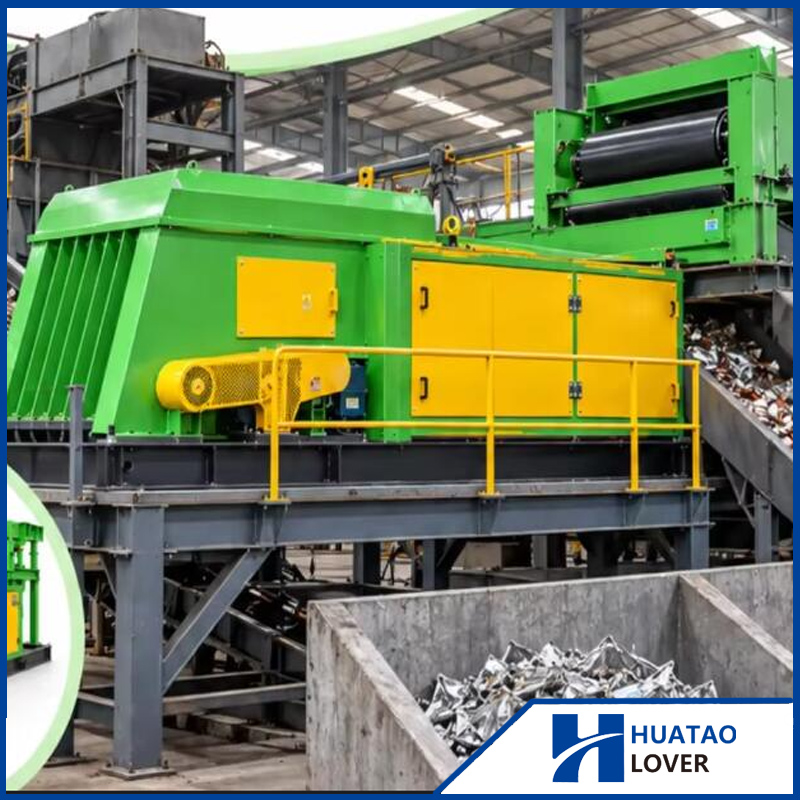
1. Why Is Eddy Current Separation Important in Electronic Waste Recycling?
Electronic waste contains a combination of valuable metals, plastics, glass, ceramics and composite materials.
After dismantling and mechanical processing, non-ferrous metals may remain mixed with non-metallic fragments.
A suitably configured eddy current separator for WEEE recycling can help recover liberated aluminum, copper and other conductive particles.
The recovered concentrate can then be sold or processed according to its composition and downstream market requirements.
Unlike conventional ferrous magnetic separation, eddy current separation relies on electrical conductivity and electromagnetic induction.
Understanding this distinction is important when selecting equipment for electronic scrap.
2. Which Magnetic Rotor Is Suitable for Electronic Scrap?
Different electronic waste materials require different magnetic field configurations.
Larger aluminum fragments may respond effectively to conventional magnetic rotors. Smaller conductive particles may require specialized high-frequency configurations.
The relationship between rotor design and separation performance should be evaluated before finalizing equipment specifications.
Important factors include magnetic pole configuration, rotor diameter, rotational speed, magnetic field distribution and the distance between the material and rotor.
The appropriate operating range should be established through material testing.
HUATAO recommends evaluating the entire magnetic system rather than relying exclusively on maximum rotor speed.
3. How Should Electronic Waste Be Prepared?
Material preparation determines whether the separator receives a suitable feed.
The electronic waste recycling line engineering process may include safe dismantling, primary shredding, secondary size reduction, particle classification and metal recovery.
Batteries and hazardous components must be removed or managed through appropriate specialized processes before ordinary shredding.
Controlled size reduction helps liberate metal particles from surrounding plastics and other materials.
However, unnecessary crushing can generate dust and difficult fine fractions.
Reviewing magnetic separator selection requirements is equally important because ferrous contamination can interfere with downstream separation and equipment operation.
4. How Do Particle Size and Throughput Affect Equipment Selection?
Particle size influences the response of conductive metals within the changing magnetic field.
Small copper particles, thin aluminum flakes and irregular metal fragments may follow different discharge trajectories.
The material size and throughput selection guide provides an engineering framework for comparing equipment configurations.
Buyers should determine:
-
Minimum and maximum particle sizes.
-
Particle-size distribution.
-
Bulk density and moisture.
-
Actual hourly feed rate.
-
Required working width.
-
Feeding uniformity.
-
Target metal concentration.
The separator should be sized according to the material entering the ECS rather than the maximum rated capacity of the primary shredder.
A controlled material layer helps reduce particle overlap and improve separation consistency.
5. How Can Recycling Plants Improve Copper and Aluminum Recovery?
The recovery of copper and aluminum from electronic scrap depends on particle liberation, physical properties and separator settings.
A conventional ECS generally produces a mixed conductive metal concentrate rather than independently purified copper and aluminum products.
Additional separation equipment may be necessary when individual metal grades are required.
To assess performance, measure the amount of target metal entering the machine, the quantity recovered and the remaining losses.
The non-ferrous metal recovery guide provides further considerations for processing mixed shredded materials.
Both recovery rate and final concentrate purity should be included in equipment acceptance criteria.
6. How Can You Integrate the Separator into an Existing Line?
Installation planning should consider feeding height, conveyor connection dimensions, available floor space, electrical supply and maintenance accessibility.
The industrial recycling plant ECS selection guide explains additional factors related to complete production systems.
For facilities processing multiple materials, the eddy current separator industry application guide provides examples of different separation requirements.
Dust extraction, equipment guarding, emergency stops and appropriate electrical protection must also be included in the installation design.
7. How Can Maintenance Support Long-Term Performance?
Regular inspections should cover conveyor belts, bearings, rotor assemblies, drive components and adjustable splitters.
Changes in feed characteristics should be investigated whenever recovery performance becomes inconsistent.
The metal separation efficiency and maintenance guide provides additional information about maintaining stable industrial processes.
Planned maintenance and suitable spare parts can help reduce avoidable production interruptions.
Conclusion
Selecting an eddy current separator for electronic waste requires coordinated evaluation of material preparation, magnetic rotor configuration, production capacity and separation performance.
HUATAO provides recycling machinery and equipment selection support for industrial waste processing applications.
Contact us to discuss your electronic waste recycling project.
Email: marketing@huataogroup.com
Tel/WeChat/WhatsApp: 008613383116640
Website: www.huataoshredder.com
WhatsApp: http://wa.me/13383116640
#EddyCurrentSeparator #EWasteRecycling #WEEERecycling #ElectronicWaste #CopperRecovery #AluminumRecovery #MetalRecycling #MetalSeparation #RecyclingEquipment #RecyclingMachinery #IndustrialRecycling #MaterialRecovery #RecyclingTechnology #NonFerrousMetals #CircularEconomy #WasteProcessing #RecyclingPlant #ElectronicScrap #WasteManagement #HUATAO



 WhatsApp