Selecting a hydraulic baler requires an evaluation of the complete material-handling process. The machine must accept the incoming material, compress it consistently, produce bales that meet downstream requirements and operate within the facility's available space and power supply.
The most reliable selection process begins with material analysis and production data—not with a machine's advertised pressing force.
HUATAO's Hydraulic Baling Machine is a starting point for evaluating baling equipment in recycling applications.
1. Material Characteristics: The First Selection Parameter
The material being compressed determines much of the machine configuration.
Evaluate:
-
Bulk density before compression
-
Material dimensions and shape
-
Moisture content
-
Elasticity and rebound after compression
-
Contamination
-
Feeding behavior
-
Required finished-bale density
Cardboard, waste paper, plastic film, PET bottles, textiles and metal scrap have different compression characteristics. A machine should be selected for the dominant material stream and any difficult secondary materials that it must handle.
For injection molding plants with recurring plastic production waste, review the Vertical Hydraulic Baler for Injection Molding Plant Waste.
2. Vertical vs. Horizontal: Compare the Material Flow
| Selection factor |
Vertical baler |
Horizontal baler |
| Typical operation |
Batch feeding |
Batch or continuous feeding, depending on configuration |
| Space requirement |
Generally more compact |
Generally requires a longer installation area |
| Labor |
Often more manual handling |
Can reduce handling with conveyor integration |
| Material volume |
Often suited to smaller flows |
Often suited to larger flows |
| Automation |
Manual or semi-automatic options |
Semi-automatic and automatic options |
| Bale handling |
Depends on chamber and ejection design |
Depends on discharge and tying design |
These are general selection tendencies, not fixed rules. Actual suitability depends on the model and configuration.
Compare the Vertical and Horizontal Hydraulic Baler with your facility's material flow, floor plan and labor arrangement.
3. Calculate Real Throughput, Not Just Theoretical Capacity
A baler's production rate depends on the entire operating cycle.
A useful calculation should include:
-
Material feeding.
-
Chamber filling.
-
Compression.
-
Pressure holding, if required by the material and machine design.
-
Bale tying.
-
Bale discharge.
-
Chamber preparation for the next cycle.
Estimate average and peak incoming material volume. Then compare the expected operating cycle with the required tonnes per hour or tonnes per shift.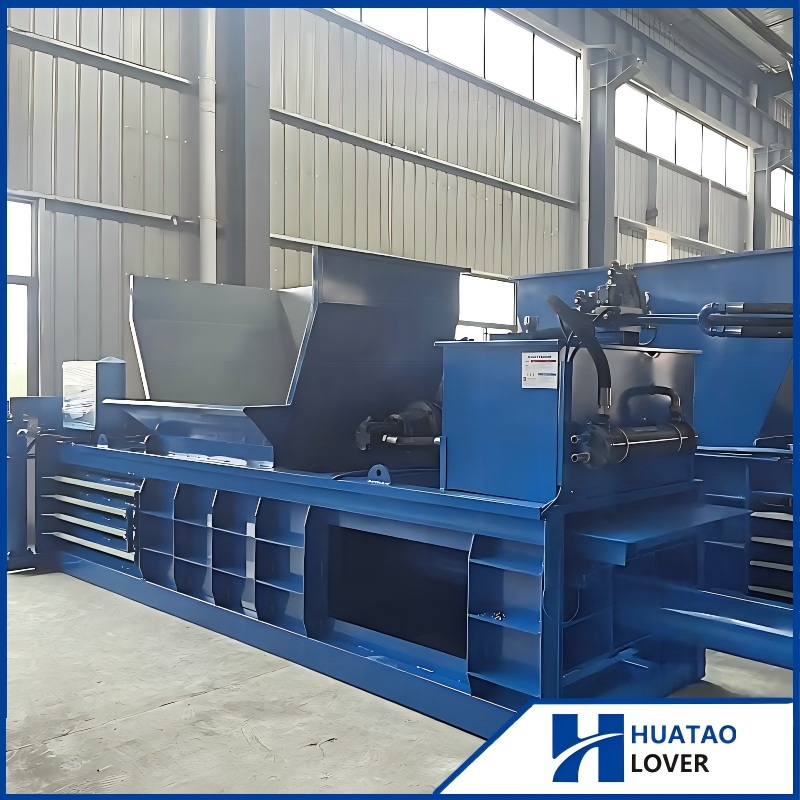
If the baler is connected to a recycling line, its capacity should be coordinated with upstream equipment. The Waste Recycling Production Line provides a broader context for planning equipment around material flow.
For plastic processing, review the Waste Plastic Recycling Line and its Closed-Loop Process Architecture.
4. Pressing Force, Chamber Size and Bale Density
Pressing force is important, but it is not a complete measure of baler performance.
The buyer should evaluate the relationship between:
A machine with a higher nominal force may not deliver the required output if its chamber size, feeding arrangement or cycle time is unsuitable.
Bale density should be discussed together with bale dimensions and handling requirements. The finished bale must be stable and compatible with storage, forklift handling and downstream buyer specifications.
For PET bottle operations, compare the baling requirements with the PET Bottle Recycling Line.
5. Hydraulic Power Unit and System Reliability
The hydraulic system is central to the machine's operation.
Ask the supplier to specify:
-
Hydraulic pump type and capacity
-
Motor power and electrical requirements
-
Cylinder configuration
-
Rated working pressure
-
Valve and control arrangement
-
Hydraulic oil requirements
-
Filtration system
-
Oil cooling method
-
Hose and seal replacement access
Do not compare two machines based only on their pressure rating. The pump, cylinder, chamber, controls and operating cycle must work as a coordinated system.
6. Automation and Material Feeding
Automation should solve a real production problem.
A manual system may be appropriate where material is generated in small batches. Conveyor feeding and automatic control may be more suitable where waste is generated continuously.
Evaluate:
For textile processing, review the Waste Clothing Recycling Production Line and determine how baling fits into the material-handling sequence.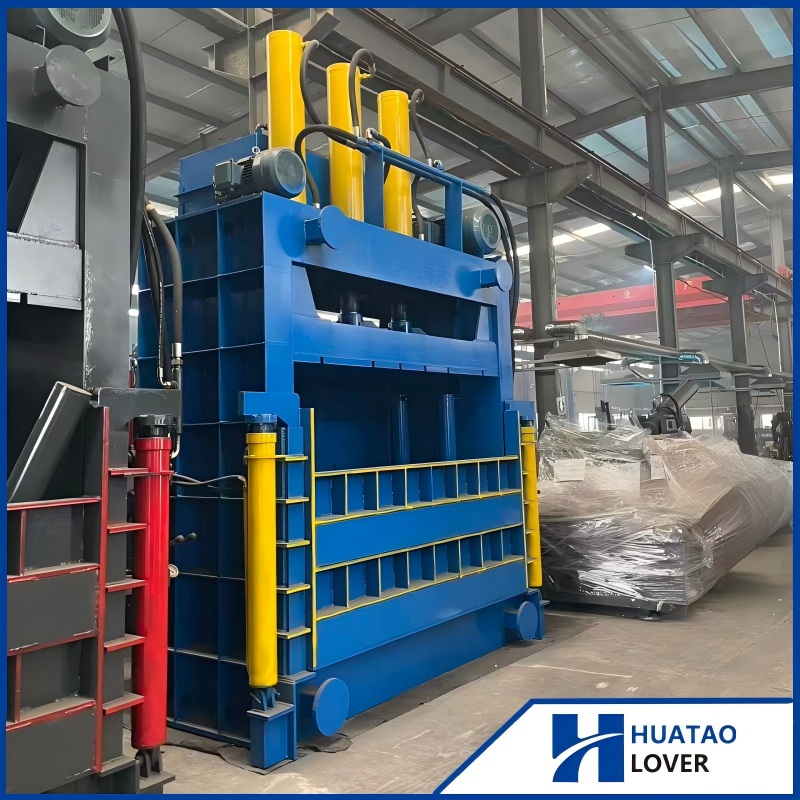
7. Confirm Whether a Baler Is the Correct Machine Type
A conventional hydraulic baler is not suitable for every form of recyclable material.
Loose metal chips or fine residues may require a briquetting machine to form compact blocks. See the Hydraulic Copper Foil Briquetting Machine.
For larger scrap metal streams, review the Scrap Metal Recycling Production Line and confirm whether the required process uses a baler, shear, shredder or another specialized machine.
For rubber materials, the Hydraulic Guillotine Rubber Bale Cutter represents a separate cutting application and should not be confused with a baler.
8. Installation, Safety and Maintenance Access
The machine layout should include the full operating area, not only the baler footprint.
Check:
-
Machine length, width and height
-
Feeding conveyor and hopper space
-
Bale exit and staging area
-
Forklift movement
-
Electrical connection
-
Access to hydraulic components
-
Inspection and maintenance clearance
-
Operator access and safety zones
Safety evaluation should include guards, interlocks, emergency stops and safe energy-isolation procedures. Jam clearing and maintenance must follow the manufacturer's instructions.
9. Maintenance and Spare Parts
Hydraulic balers require planned inspection of hydraulic and mechanical components.
A maintenance plan should address:
Ask the supplier which spare parts should be stocked and what technical support is available.
Read How to Maintain a Hydraulic Baler: Expert Tips to Extend Service Life and Cut Downtime before finalizing the maintenance plan.
10. Technical Data Required for Supplier Evaluation
| Information |
Required details |
| Material |
Type, composition, moisture and contamination |
| Input volume |
Average and peak tonnes per hour or per shift |
| Bale specification |
Dimensions, weight and target density |
| Feeding |
Manual, hopper, conveyor or integrated line |
| Automation |
Manual, semi-automatic or automatic |
| Power |
Voltage, frequency and available supply |
| Installation |
Floor space, height and access |
| Handling |
Forklift, pallet truck or other method |
| Maintenance |
Oil, filters, wear parts and service access |
| Commercial |
Delivery, installation, training and support |
Request a technical proposal based on this information rather than asking for a quotation based only on a general machine name.
FAQ
Q1: How do I select the correct hydraulic baler capacity?
Use measured material volume, peak generation, operating shifts and the full compression, tying and discharge cycle. Confirm the expected output with the actual material.
Q2: Is a horizontal baler always more productive?
Not in every installation. It is generally better suited to larger or continuous material flows, but actual productivity depends on feeding, cycle time, material and configuration.
Q3: Does higher pressing force guarantee denser bales?
No. Bale density also depends on chamber geometry, material properties, bale dimensions and the way the machine operates.
Q4: Can one baler process cardboard, plastic and metal?
Do not assume so. Each material has different compression behavior and machine requirements. Confirm compatibility with the supplier.
Q5: What is the difference between a baler and a briquetting machine?
A baler generally compacts bulk recyclable materials into larger bales. A briquetting machine is designed to form compact blocks from suitable loose materials such as certain metal chips or residues.
Conclusion
A suitable hydraulic baler is the result of matching material characteristics, actual throughput, pressing system, chamber size, bale requirements and facility layout.
Buyers should evaluate the complete operating cycle, hydraulic system, automation, safety and maintenance requirements. This approach is more reliable than selecting equipment by pressing force or purchase price alone.
Contact HUATAO GROUP
Email: Team5@huataogroup.com
Tel / WeChat / WhatsApp: 008613383116640
WhatsApp: http://wa.me/13383116640
Website: www.huataoshredder.com
#HydraulicBaler #BalerSelection #HydraulicBalingMachine #VerticalBaler #HorizontalBaler #BaleDensity #RecyclingMachinery #WasteManagement #ScrapMetalRecycling #PlasticRecycling #IndustrialEquipment #BalerMaintenance



 WhatsApp