If an industrial shredder operates normally with ordinary feedstock but repeatedly jams and reverses when thick materials enter the cutting chamber, the machine is likely experiencing excessive cutting resistance. The cause may be insufficient available torque, but operators should also investigate feeding quantity, material geometry, blade condition, and mechanical or electrical problems.
1. What Does Automatic Reversing Actually Mean?
Automatic reversing is commonly used as part of an overload protection strategy. When the rotor encounters excessive resistance, the control system may stop or reverse its rotation to release the material and reduce the risk of damage.
However, reversing is a symptom of an overload condition, not a diagnosis of its root cause.
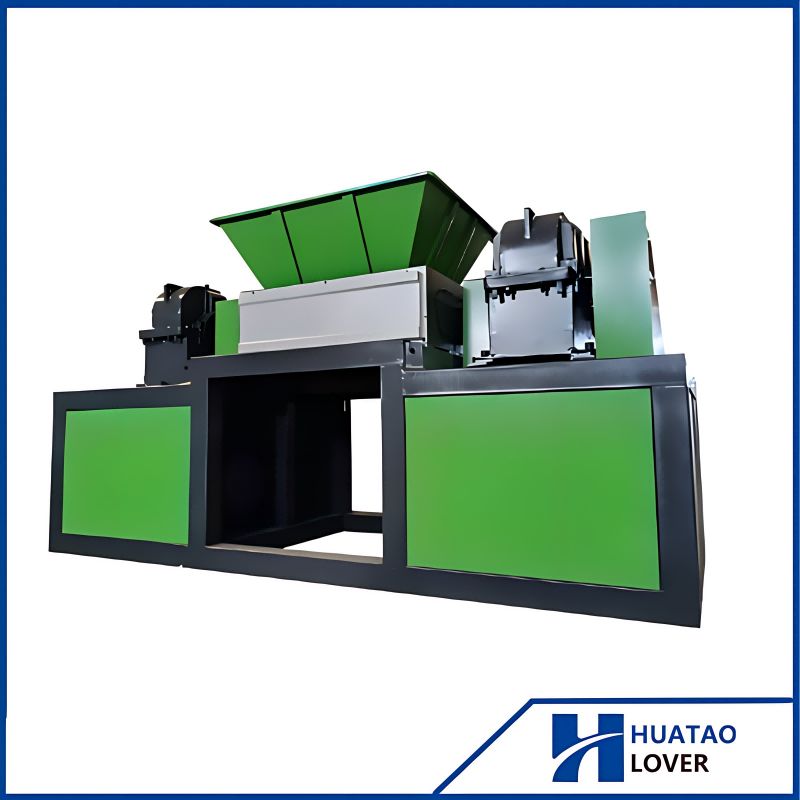
For example, a double shaft shredder and a single shaft shredder have different cutting and feeding arrangements. The same material may behave differently in different machine configurations.
2. Cause One: Insufficient Available Cutting Torque
Thick and dense materials generally require greater cutting force. If the machine's drive configuration and cutting system are not suitable for the material, the rotor may slow down or trigger overload protection.
But motor power alone cannot determine whether a shredder has sufficient cutting capability.
The evaluation should include motor power, gearbox reduction, transmission design, rotor configuration, blade arrangement, and the characteristics of the material.
When comparing machine configurations, review the 600 type double shaft shredder, 800 type double shaft shredder, 1000 type double shaft shredder, and 1200 type double shaft shredder. Actual suitability must be confirmed against the feedstock and required production conditions.
3. Cause Two: Overfeeding and Unstable Material Feeding
Even a correctly configured shredder can overload when too much material enters the cutting chamber at once.
This is especially common when operators feed several thick pieces simultaneously or push oversized materials into the machine without checking whether they are suitable for the cutting chamber.
Typical warning signs include:
-
The machine operates normally at a low feed rate.
-
Reversing becomes frequent when the feed rate increases.
-
The rotor slows down immediately after a large piece enters.
-
The problem becomes less frequent when feeding is reduced.
A controlled feeding test can help determine whether the issue is related to operating practice or machine capability.
4. Cause Three: Worn Blades and Excessive Cutting Resistance
Blade condition has a direct effect on cutting performance.
When cutting edges become dull, the machine may need more force to process the same material. Chipped edges, incorrect clearances, loose mounting, or unsuitable blade geometry may also contribute to abnormal resistance.
Operators should inspect the cutting edges, blade mounting, and clearance according to the manufacturer's maintenance procedures.
For further guidance, see how to maintain shredder blades, automatic linear knife sharpening equipment, and plastic crusher blade material selection.
5. Cause Four: Drive-System or Electrical Problems
If the machine reverses even when processing suitable material at a controlled feed rate, inspect the drive and electrical systems.
Potential issues include:
-
Voltage instability or power supply problems.
-
Excessive motor current.
-
Motor overheating or abnormal motor condition.
-
Gearbox wear or lubrication problems.
-
Coupling or transmission damage.
-
Incorrectly configured overload protection.
Operators should record alarm codes, current readings, and the conditions under which reversing occurs. Qualified technicians should evaluate the motor, gearbox, transmission, and protection settings.
6. Cause Five: Incorrect Machine Selection for the Material
Not every shredder is suitable for every material.
Flexible waste, bulky items, thick rigid plastics, and scrap metal can place very different demands on the cutting system.
A machine selected primarily for flexible materials may not be appropriate for thick, rigid feedstock without a suitable configuration.
Review the common issues with double shaft shredders, double shaft shredder maintenance guide, and flexible waste shredding solution.
For complete processing applications, also consider the requirements of a waste recycling production line, scrap metal recycling production line, or waste plastic recycling line.
7. A Step-by-Step Troubleshooting Method
| Observation |
What to investigate |
| Reverses only with thick materials |
Material dimensions, density, and machine suitability |
| Reverses when feeding quantity increases |
Overfeeding and feed consistency |
| Reverses even at a low feed rate |
Blade condition, drive system, and electrical supply |
| Cutting performance has gradually declined |
Blade wear, clearance, and mechanical condition |
| Reversing occurs with unusual noise or vibration |
Stop and arrange a qualified mechanical inspection |
Before inspection, stop the machine and follow the site's lockout and safety procedures. Never reach into the cutting chamber or bypass overload protection.
8. How Can Repeated Reversing Be Reduced?
A reliable prevention strategy includes:
-
Confirming that the material is suitable for the machine.
-
Maintaining a stable feeding rate.
-
Avoiding oversized or unsuitable feedstock.
-
Inspecting blades and clearances regularly.
-
Monitoring motor current and abnormal alarms.
-
Maintaining the gearbox and transmission system.
-
Reviewing the machine configuration when material requirements change.
Conclusion: Diagnose the Overload Before Increasing Motor Power
When a shredder repeatedly jams and reverses on thick materials, insufficient torque is one possible cause—but it should not be assumed.
Overfeeding, material geometry, blade wear, mechanical resistance, and electrical or drive-system problems can produce similar symptoms.
The most effective troubleshooting approach is to compare operating conditions, inspect the cutting system, and verify whether the machine is correctly configured for the actual feedstock.
A shredder should be selected and operated according to the material it needs to process—not simply according to motor power.
Contact Us
Email: Team5@huataogroup.com
Tel / WeChat / WhatsApp: 008613383116640
WhatsApp: http://wa.me/13383116640
Website: https://www.huataoshredder.com



 WhatsApp