In an industrial recycling system, material recovery is only one part of the operation. Once recyclable materials have been collected, sorted, and prepared, facilities must convert them into a form that can be stored, handled, and transported efficiently.
A hydraulic baler performs this consolidation function. Its role is to apply controlled hydraulic force to suitable materials and form compact bales that meet operational and downstream requirements.
1. Volume Reduction: The First Operational Benefit
Loose recyclables often have a low bulk density. Cardboard, paper, plastic film, and certain metal materials can occupy considerable space before compression.
A hydraulic power unit drives a cylinder and ram to compress the feed material inside the chamber. The resulting volume reduction can improve storage utilization and make material accumulation easier to manage.
The machine configuration should be matched to the material and required bale characteristics. See the hydraulic baling machine range and vertical and horizontal hydraulic baler configurations.
2. Bale Formation and Material Stability
Compression alone does not guarantee a stable bale. The final result also depends on material properties, chamber design, compression behavior, and the tying or retention method.
A facility should define:
-
Target bale dimensions
-
Required bale weight and density
-
Material composition and moisture
-
Tying method and bale stability
-
Handling and stacking requirements
The receiving buyer's specifications should be confirmed before equipment selection.
3. Integration with Upstream Processing
A baler generally operates after the material has been collected and prepared. Depending on the recycling stream, upstream processes may include sorting, conveying, shredding, screening, and separation.
For example, a waste recycling production line may use different equipment combinations depending on the feedstock. A scrap metal recycling production line may require material-specific preparation before compression.
For size reduction, facilities may evaluate single shaft shredders, double shaft shredders, or the 600-type double shaft shredder.
Blade condition can influence upstream consistency. Related technical resources include shredder blade maintenance and double shaft shredder troubleshooting.
4. Storage, Handling, and Logistics
The main operational value of baling is often realized after the compression cycle.
Compact bales can be easier to:
-
Stack in designated storage areas
-
Move with suitable forklifts or handling equipment
-
Weigh, identify, and record
-
Load for dispatch
-
Protect from excessive scattering during storage
Increasing density may improve vehicle space utilization, but payload limits, bale dimensions, and loading methods must still be respected.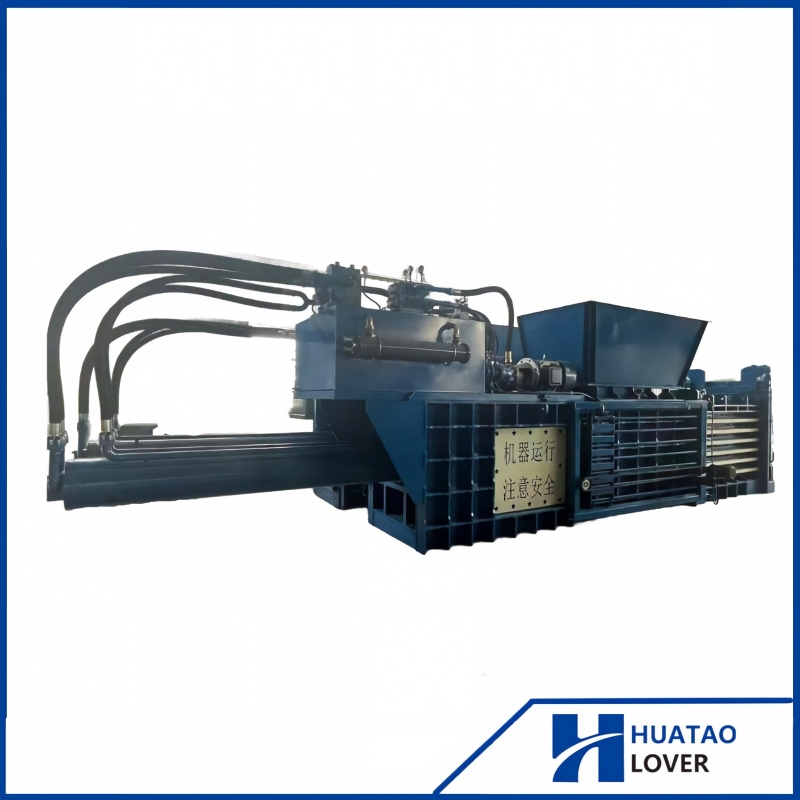
5. Matching the Baler to the Material Stream
A baler should not be selected by hydraulic force alone. The engineering assessment should include:
Material characteristics: Composition, bulk density, moisture, dimensions, elasticity, and contamination.
Throughput: Average and peak feed rates, operating hours, and required cycle frequency.
Machine arrangement: Vertical or horizontal configuration, chamber size, feeding system, tying method, and discharge arrangement.
Site conditions: Floor space, electrical supply, access for maintenance, and bale handling equipment.
Downstream requirements: Bale dimensions, weight, density, acceptable material quality, and transportation constraints.
For plastic applications, review PET bottle recycling systems, plastic recycling line configurations, and engineering a waste plastic recycling line.
Other applications may include waste clothing recycling and complete tyre recycling lines.
6. Specialized Materials May Require Different Equipment
Not all recyclable materials should be processed in a conventional baler.
Loose metal chips, copper foil, and other fine or irregular materials may require specialized briquetting or pressing equipment to achieve a stable output. One example is a hydraulic copper foil briquetting machine.
Material trials and downstream acceptance criteria should guide the final equipment decision.
7. Hydraulic System Reliability and Preventive Maintenance
The hydraulic system is central to baler performance. Its condition affects pressure generation, movement, cycle consistency, and operating reliability.
A maintenance plan should cover:
-
Oil level, cleanliness, and replacement intervals
-
Hydraulic hoses, seals, and cylinder condition
-
Filters, valves, and connections
-
Electrical controls and safety interlocks
-
Chamber wear and structural inspection
-
Tying and bale discharge mechanisms
For a practical checklist, see hydraulic baler maintenance tips.
Where blade preparation is part of the wider operation, facilities may also review automatic linear knife sharpening machines.
8. Safety Is Part of System Design
Hydraulic balers contain high-force moving components. Risk controls should address the compression chamber, feeding point, ram movement, tying area, and bale discharge zone.
Operators must be trained to use guarding, interlocks, emergency stops, and approved isolation procedures. Never enter the chamber or clear a jam while the machine is energized. Maintenance must follow the manufacturer's lockout and energy-isolation requirements.
Conclusion
A hydraulic baler is a material-consolidation stage in an industrial recycling system. It helps convert suitable loose recyclables into compact bales that are easier to store, handle, and transport.
Its effectiveness depends on more than compression force. Material compatibility, upstream preparation, bale specifications, downstream logistics, maintenance, and safety must all be considered together.
Contact Us
Email: Team5@huataogroup.com
Tel / WeChat / WhatsApp: 008613383116640
WhatsApp: http://wa.me/13383116640
Website: https://www.huataoshredder.com
#HydraulicBaler #RecyclingEngineering #IndustrialRecycling #BaleCompaction #RecyclingPlant #WasteManagement #MaterialHandling #HydraulicEquipment



 WhatsApp