In a recycling production line, different materials need to be separated before they can be processed or recovered effectively. Mixed waste may contain iron, steel, aluminum, copper, plastics, and other materials.
Among the various sorting technologies used in recycling, magnetic separation plays an important role in removing ferrous metals from mixed material streams.
What Is Magnetic Separation?
Magnetic separation is a process that uses magnetic force to attract and remove ferrous materials, mainly iron and steel, from a mixture.
A magnetic separator can be installed above a conveyor belt, at a discharge point, or in a designated sorting section, depending on the production line design.
Common equipment types include:
The appropriate type depends on the material composition, conveyor arrangement, and separation requirements.
How Does a Magnetic Separator Work?
When mixed materials move along a conveyor, ferrous particles pass through the magnetic field generated by the separator. Iron and steel are attracted and removed from the main material stream.
The separated ferrous materials are collected separately, while the remaining materials continue to downstream processing.
In a complete recycling production line, this process can be coordinated with shredding, screening, and other sorting equipment.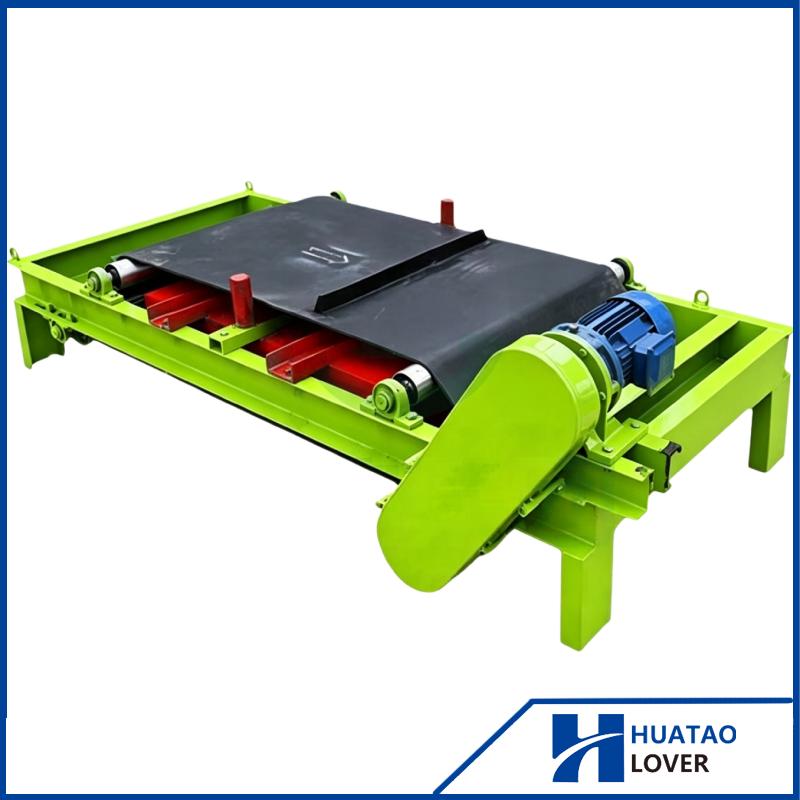
Why Is Magnetic Separation Important?
1. Recovering Ferrous Metals
Magnetic separation helps collect iron and steel from mixed waste, allowing these materials to enter further recycling processes. It is therefore useful in scrap metal recycling systems.
2. Improving Material Quality
Removing ferrous contamination helps improve the quality of other recovered material fractions.
3. Reducing Equipment Risks
Metal fragments entering crushers and shredders may increase the risk of damage or production interruptions. Removing ferrous materials before downstream processing helps reduce these risks.
HUATAO provides double shaft shredders and single shaft shredders for industrial size-reduction applications.
4. Supporting Further Material Sorting
After ferrous metals have been removed, the remaining materials can proceed to further sorting. An eddy current separator can help recover suitable non-ferrous metals such as aluminum and copper.
Where Are Magnetic Separators Used?
Magnetic separators are commonly used in:
-
Scrap metal recycling
-
E-waste recycling
-
Municipal solid waste treatment
-
Construction and demolition waste recycling
-
Plastic recycling
-
Industrial waste management
For example, an e-waste recycling line may use magnetic separation to remove ferrous metals from processed electronic materials.
You can also explore HUATAO's article about e-waste shredding and downstream recovery.
Magnetic Separator vs. Eddy Current Separator
These two technologies perform different separation tasks.
Used in sequence, they can help separate different metal fractions from mixed recycling materials. More details are available in HUATAO's article about e-waste eddy current separation.
How to Choose the Right Equipment
Before selecting a magnetic separator, consider the following factors:
The equipment configuration should be selected according to the actual material conditions and production objectives.
To learn more about HUATAO's recycling equipment and company background, visit the HUATAO GROUP website.
Conclusion
Magnetic separation is an important step in improving recycling line performance. It helps recover ferrous metals, reduce unwanted contamination, and lower the risks associated with downstream equipment.
By selecting suitable magnetic separation equipment and integrating it with other processing stages, recycling facilities can build a more coordinated material recovery system.
Contact Us
Email: marketing@huataogroup.com
Tel/WeChat/WhatsApp: 008613383116640
WhatsApp: http://wa.me/13383116640
Website: www.huataoshredder.com
#MagneticSeparation #MagneticSeparator #FerrousMetalRecovery #WasteRecycling #ScrapMetalRecycling #EWasteRecycling #RecyclingProductionLine #MetalRecovery #HUATAOShredder



 WhatsApp