A hydraulic baler is a force-delivery system constrained by structural limits. The material determines how much force is required, how the compression chamber must be built, whether cutting blades are necessary and what bale density is achievable. Specifying the machine before defining the material profile is the most common source of procurement error.
The Physics of Baling: Density and Force
Every baling application applies hydraulic pressure to reduce volume and increase density. What varies is the resistance the material offers and the density the downstream buyer requires. A HYDRAULIC BALING MACHINE for paper applications typically achieves 180–250 kg/m³, a four- to five-fold increase over loose material. Plastics resist compression through polymer memory and require binding systems that account for post-compression expansion. Metals offer the highest resistance and require reinforced structures to withstand abrasive, sharp-edged feedstock.
Metal Baling: Force Scaling and Structural Requirements
Metal scrap baling demands more from the machine than any other common application. A HYDRAULIC COPPER FOIL BRIQUETTING MACHINE demonstrates the principle in a focused application: loose copper foil scrap is compressed into high-value recyclable blocks, but the press force and chamber construction must match the material's density and hardness.
For general metal scrap, force requirements climb into the 250–400-ton range for thick plate and structural sections. Long, stringy materials such as steel wire can bridge within the chamber. Metal balers frequently incorporate cutting blades on the press head that shear long materials as the ram advances. A HYDRAULIC GUILLOTINE RUBBER BALE CUTTER addresses a related need—reducing baled rubber before further processing.
For integrated metal processing, a SCRAP METAL RECYCLING PRODUCTION LINE combines baling with upstream shredding and separation to produce furnace-ready material.
Plastic Baling: Spring-Back and Bale Integrity
Plastic materials retain memory—they want to expand after the press retracts. A bale that appears tight at ejection may loosen during transport if strapping does not match the material's expansion behavior. A VERTICAL HYDRAULIC BALER FOR INJECTION MOLDING PLANTS with 10–60 tons of adjustable pressure suits 200–1,000 kg daily output. Volume reduction reaches 88%.
For higher volumes, VERTICAL AND HORIZONTAL HYDRAULIC BALER configurations with automatic tying become relevant. The selection question is throughput and labor, not machine type in isolation.
Paper and Cardboard: Density Specification Dominates
Paper baling is the most straightforward application from an engineering perspective. The material compresses predictably, and force requirements are moderate. The critical specification is bale density, which must meet mill requirements, and bale dimension consistency, which affects stacking and transport efficiency.
Textile Baling: Integrity Without Cutting
Textiles compress readily but lack cohesion. The engineering emphasis falls on binding system reliability and chamber design that prevents material migration during compression. A WASTE CLOTHING RECYCLING PRODUCTION LINE integrates baling with sorting and fibre recovery. Press force is secondary.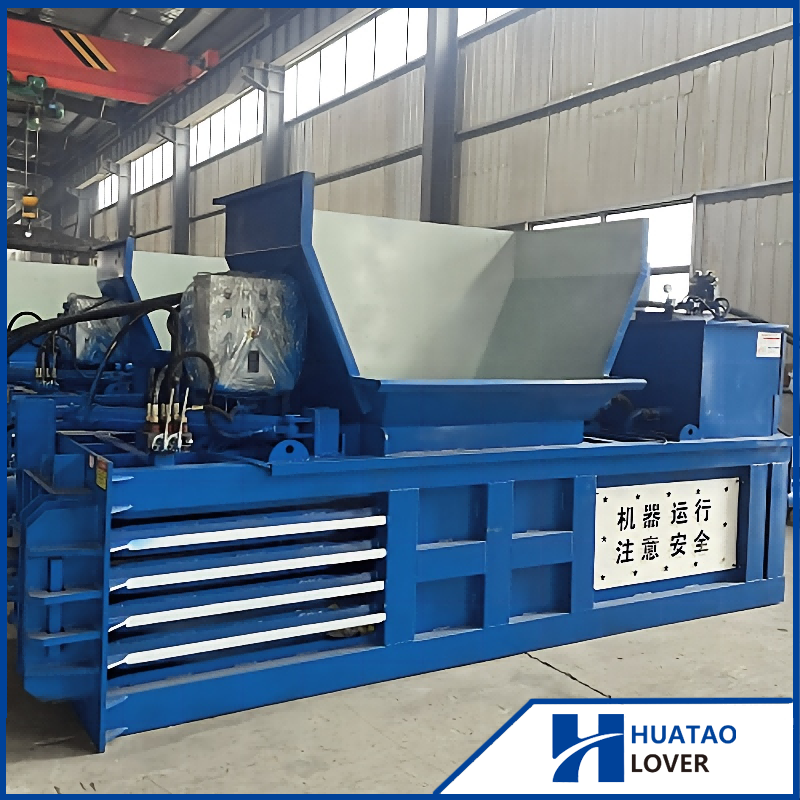
Failure Modes to Design Against
| Failure Mode |
Root Cause |
Design Response |
| Bale breakage during transport |
Strapping mismatched to material spring-back |
Match wire/strap tensile to material behavior |
| Chamber bridging |
Long stringy materials |
Cutting blades on press head |
| Premature chamber wear |
Abrasive metal scrap |
Reinforced chamber, replaceable liners |
| Hydraulic overheating |
Continuous cycling at peak pressure |
Adequate cooling, duty-cycle rating |
| Bale density inconsistency |
Variable feed material |
Consistent feed preparation, pressure maintenance |
For preventive maintenance scheduling, refer to HOW TO MAINTAIN A HYDRAULIC BALER. For blade and cutting-system wear, DO YOU KNOW HOW TO MAINTENANCE AND CARE OF THE SHREDDER BLADE provides related guidance on cutting-component care in recycling operations.
Related Articles
FAQ
What press force do I need for aluminum cans?
100–250 tons is typically sufficient for light-gauge ferrous and non-ferrous materials including aluminum cans.
Can one baler handle both cardboard and plastic?
A machine configured for cardboard can process some plastic materials, but bale integrity may suffer due to polymer spring-back. Dedicated plastic configurations address this issue.
How is bale density measured?
Bale density is expressed in kg/m³ or t/m³, calculated from bale weight divided by bale volume.
What maintenance does a hydraulic baler require?
Daily: visual inspection, hydraulic oil level, abnormal noise. Weekly: binding system inspection, hydraulic system check. Monthly: blade/liner wear measurement, structural inspection.
Contact: Lynn | 008619322401687 (WeChat/WhatsApp) | sale52@huataogroup.com | https://www.huataoshredder.com
10 Core Keywords: hydraulic baler, baling machine, scrap metal baler, plastic baler, cardboard baler, bale density, press force, recycling equipment, waste compaction, material recovery
#HydraulicBaler #BalingEngineering #ScrapMetal #PlasticRecycling #PaperRecycling #RecyclingMachinery #WasteManagement #IndustrialEquipment #B2BManufacturing #HUATAO



 WhatsApp