

Metal scrap presents a different set of challenges from paper or plastic. Its density is higher, its shapes are more irregular, and its value is determined not only by weight but by the form in which it reaches the smelter. A Hydraulic Baling Machine configured for metal applications transforms loose, awkward scrap into dense, uniform bales that meet the specifications of steel mills, foundries, and secondary smelters .
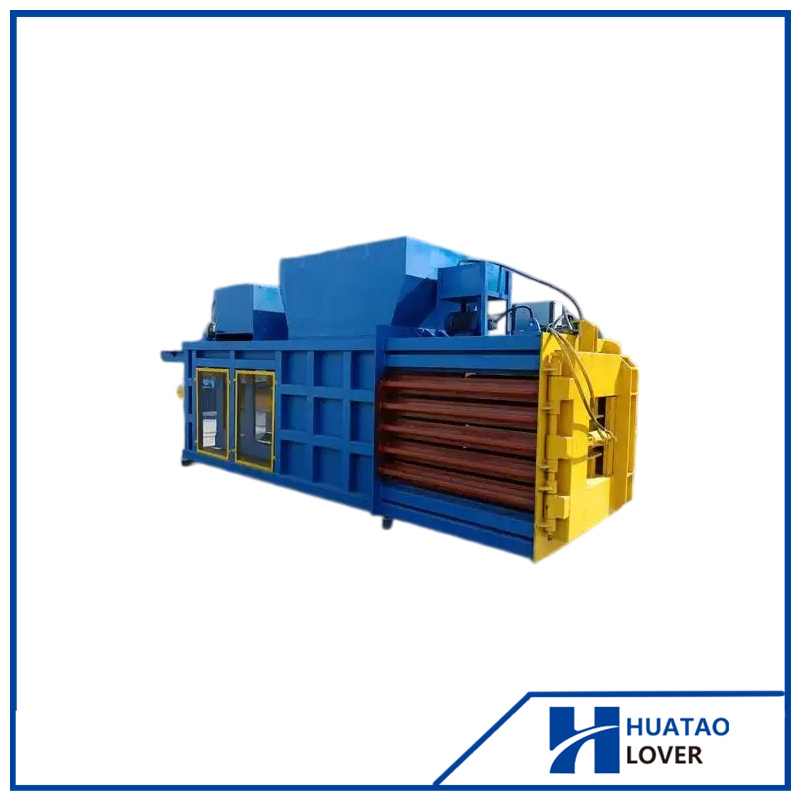
The Role of the Hydraulic Baling Machine in Metal Recovery
The Hydraulic Baling Machine for metal applications serves two primary functions: volume reduction and density standardization. Loose metal scrap—whether from manufacturing offcuts, demolition, or end-of-life products—occupies valuable storage space and creates handling difficulties. By compressing this material into coherent bales, the Hydraulic Baling Machine enables efficient stacking, storage, and transport while producing a material form that can be charged directly into furnaces .
The Hydraulic Baling Machine processes a wide range of metal feedstock, including steel and iron scrap, aluminum sheet and profiles, copper and brass offcuts, stainless steel, and wire and stringy materials . It is also used for processing end-of-life vehicle bodies, appliance shells, and mixed light-gauge metals .
Technical Specifications for Metal Hydraulic Baling Machine Applications
Metal baling demands higher press forces than paper or plastic processing. Hydraulic Baling Machine models for metal applications typically range from 63 tons to over 600 tons of compression force . The selection of press force is determined by the type of metal, the thickness of the material, and the required bale density.
For light-gauge ferrous scrap and non-ferrous materials such as aluminum cans, steel cans, and wire, a Hydraulic Baling Machine in the 100 to 250-ton range is typically sufficient. For heavier scrap including thick steel plate, structural sections, and vehicle bodies, higher-force models in the 250 to 400-ton range are required. The most demanding applications, such as baling heavy structural steel and thick-walled pipe, may require Hydraulic Baling Machine configurations exceeding 500 tons .
Bale density is a critical output parameter. For vehicle scrap and light metals, the Hydraulic Baling Machine typically achieves densities in the range of 1.2 to 1.5 tonnes per cubic meter . Higher densities improve transport economics and may command premium prices from smelters that charge by volume as well as weight.
Specialized Features for Metal Hydraulic Baling Machine Operation
Metal scrap presents unique challenges that have driven the development of specialized Hydraulic Baling Machine features.
Cutting Blades. Long or stringy materials such as steel wire, spring wire, and wire brushing scrap can bridge within the compression chamber or wrap around components. Many metal Hydraulic Baling Machine models incorporate integrated cutting blades on the press head that shear long materials as the ram advances -6. This feature prevents jamming and ensures consistent bale formation.
Door-Cover Design. Unlike paper balers that may use a simple ejection door, metal Hydraulic Baling Machine units frequently employ a hydraulic door-cover design that applies focused compression from the top while the main ram compresses horizontally. This dual-direction compression produces higher-density bales and better containment of springy materials .
Heavy-Duty Construction. The Hydraulic Baling Machine for metal applications is built with reinforced chambers and wear-resistant liners to withstand the abrasion and impact loads imposed by dense, sharp-edged scrap. Hydraulic systems are specified with premium seals and high-flow cartridge valves for reliable operation under continuous cycling.
Automation and Control
Modern Hydraulic Baling Machine units for metal processing incorporate PLC control with touchscreen interfaces, programmable cycle parameters, and real-time monitoring of hydraulic pressure and system temperature -6. Automatic bale ejection and optional automatic strapping systems reduce operator intervention and improve cycle consistency. Some models offer manual or PLC-controlled operation modes, allowing flexibility between automated production and manual control for specialized bales.
Operational Benefits of the Hydraulic Baling Machine in Metal Recycling
The Hydraulic Baling Machine delivers measurable operational improvements. Loading efficiency increases by a factor of three to six compared to loose scrap handling, storage space requirements are reduced by 60 to 80%, and the standardized bale format simplifies inventory management and shipment planning -6. For steel mills and foundries, receiving dense, uniform bales reduces charging time and improves furnace efficiency compared to loose or inconsistently sized scrap.
Contact us:
Marketing@huataogroup.com
Tel:+86 13383116640 (Wechat/whatsapp)
http://wa.me/13383116640
Website:www.huataoshredder.com
#HydraulicBalingMachine #MetalBaler #ScrapMetal #FerrousScrap #NonFerrousBaling #SteelMill #Foundry #Huatao #RecyclingEquipment #CircularEconomy
can not be empty
can not be empty

HUATAO GROUP - Recycling Machine and Spare parts
ADD : No.298 Zhonghua North Street, Shijiazhuang 050000 China.
TEL : +86 13383116640
EMAIL :marketing@huataogroup.com
 WhatsApp & WeChat : +86 13383116640