

The circular economy is often described in terms of principle: keep materials in use, design out waste, regenerate natural systems. But principles do not move material. Infrastructure does. And in the infrastructure of material recovery, the Hydraulic Baling Machine occupies a position that is rarely celebrated but absolutely essential. Without baling, the reverse logistics of recyclable materials would be economically unviable at scale. The Hydraulic Baling Machine is the machine that makes the circular economy logistically possible.
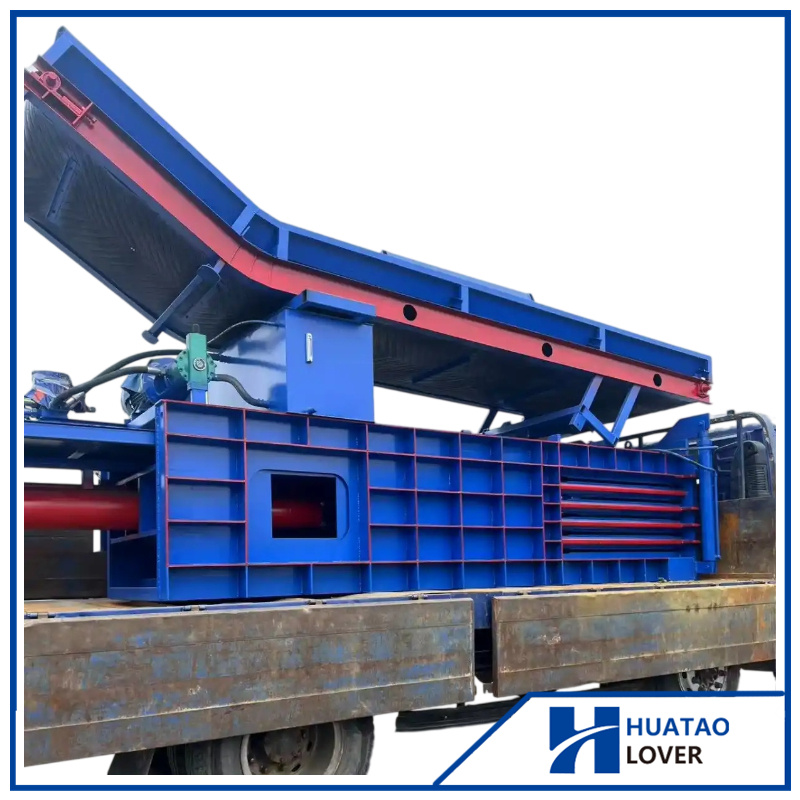
The Reverse Logistics Problem
Forward logistics — moving products from factory to consumer — is a mature discipline. Reverse logistics — recovering materials from the point of disposal back into the production cycle — is less developed and significantly more difficult. The challenge is not collection. Collection systems exist. The challenge is the economics of moving low-density, dispersed materials from thousands of generation points to a limited number of processing facilities.
Consider the geography of material recovery. Cardboard is generated in every retail store, every warehouse, every office, and every distribution centre. Plastic is generated wherever products are packaged or consumed. Metal scrap is generated in manufacturing, construction, and end-of-life product disposal. These generation points are dispersed across cities, regions, and countries. The processing facilities that can actually recycle these materials — paper mills, plastic reprocessing plants, steel foundries — are few and located at strategic industrial sites.
The Hydraulic Baling Machine bridges this geographic and economic gap. By compressing material at or near the point of generation, the Hydraulic Baling Machine converts a dispersed, low-value waste stream into a standardized commodity that can be economically accumulated, stored, and transported. The baling step is what transforms reverse logistics from an environmental obligation into a commercially viable activity.
Standardization: The Prerequisite for Commodity Status
For a material to function as a commodity, it must be standardized. Buyers require consistent specifications: consistent quality, consistent form, consistent weight, and consistent documentation. Loose recyclable material cannot meet these requirements. Baled material can.
The Hydraulic Baling Machine imposes standardization at the point of generation. A bale produced to specification has a known material composition, a known moisture content, a known weight range, and a known density. It can be traded on contract, priced per tonne, and shipped against a purchase order. Without the Hydraulic Baling Machine, each transaction would require individual inspection, negotiation, and pricing — a transaction cost structure that would make most recycling uneconomic.
This standardization function is why the Hydraulic Baling Machine appears at every scale of the recycling system. Retail back-of-store balers process a few bales per day. Distribution centre balers process dozens. Material recovery facility balers process hundreds. Each Hydraulic Baling Machine performs the same function: converting a variable, non-standard material into a consistent, tradeable commodity.
Enabling Domestic Processing Capacity
The geographic distribution of processing capacity is a strategic issue in material recovery. When recyclable material is baled at the point of generation, it can be accumulated in quantities sufficient to justify shipment to domestic processing facilities. When it is not baled, it is often exported in loose or poorly compacted form — or simply landfilled.
The Hydraulic Baling Machine therefore plays a role in industrial policy as well as operational logistics. Regions with widespread baling capacity can develop domestic recycling industries. Regions without it export their recyclable material and import processed feedstock. The Hydraulic Baling Machine is a piece of infrastructure that determines where value is added.
Material-Specific Considerations in Circular Economy Applications
Different materials present different requirements for circular economy baling.
Cardboard and Paper. OCC and mixed paper are the highest-volume baling applications in most markets. The Hydraulic Baling Machine for paper applications must achieve high bale density to meet mill specifications and must maintain consistent bale dimensions for efficient stacking and transport.
Plastics. PET, HDPE, and mixed plastics require Hydraulic Baling Machine configurations that accommodate the springy, memory-retaining characteristics of polymer materials. Bale integrity during transport is a particular concern, and wire or strapping specification must be matched to the material's expansion behaviour.
Metals. Ferrous and non-ferrous scrap requires high-force Hydraulic Baling Machine models that can compress dense, irregular, and abrasive materials into dense bales suitable for furnace charging.
Textiles and Fibres. Used clothing and textile waste are increasingly baled for export and reprocessing, requiring Hydraulic Baling Machine configurations that handle compressible but bulky materials.
The Policy Dimension
Governments and regulators increasingly recognize the role of baling infrastructure in achieving circular economy targets. Extended producer responsibility schemes, recycled content mandates, and landfill diversion targets all depend on the existence of collection, sorting, and baling infrastructure at the point of generation. The Hydraulic Baling Machine is a policy-relevant technology, not merely an operational one.
Organizations that invest in Hydraulic Baling Machine capacity are not just managing their own waste costs. They are contributing to the material supply chain that makes circular economy objectives achievable at scale. That contribution has commercial value, and increasingly it has reputational and regulatory value as well.
The Bottom Line
The circular economy requires material to move. The Hydraulic Baling Machine is the machine that allows it to move economically. Without baling, recyclable material remains dispersed, low-density, and uneconomic to transport. With baling, it becomes a standardized commodity that can be traded, accumulated, and processed.
For any organization generating recyclable material at scale, the Hydraulic Baling Machine is not an accessory. It is the entry point to the circular economy.
Contact us:
Marketing@huataogroup.com
Tel:+86 13383116640 (Wechat/whatsapp)
http://wa.me/13383116640
Website:www.huataoshredder.com
#HydraulicBalingMachine #CircularEconomy #MaterialRecovery #ReverseLogistics #BalingMachine #RecyclingInfrastructure #Huatao #Sustainability #WasteManagement #ResourceRecovery
can not be empty
can not be empty

HUATAO GROUP - Recycling Machine and Spare parts
ADD : No.298 Zhonghua North Street, Shijiazhuang 050000 China.
TEL : +86 13383116640
EMAIL :marketing@huataogroup.com
 WhatsApp & WeChat : +86 13383116640