

In the demanding world of industrial processing, cutting efficiency depends directly on the sharpness and precision of the blades used. A Knife Grinding Machine is a specialized machine tool engineered to restore industrial blades—from granulator knives and wood chipper blades to paper cutter knives and veneer peeling knives—to their optimal cutting geometry. For industries such as plastic recycling, woodworking, paper converting, and packaging, the Knife Grinding Machine is not a luxury but a strategic asset essential for maintaining productivity, product quality, and operational cost control.
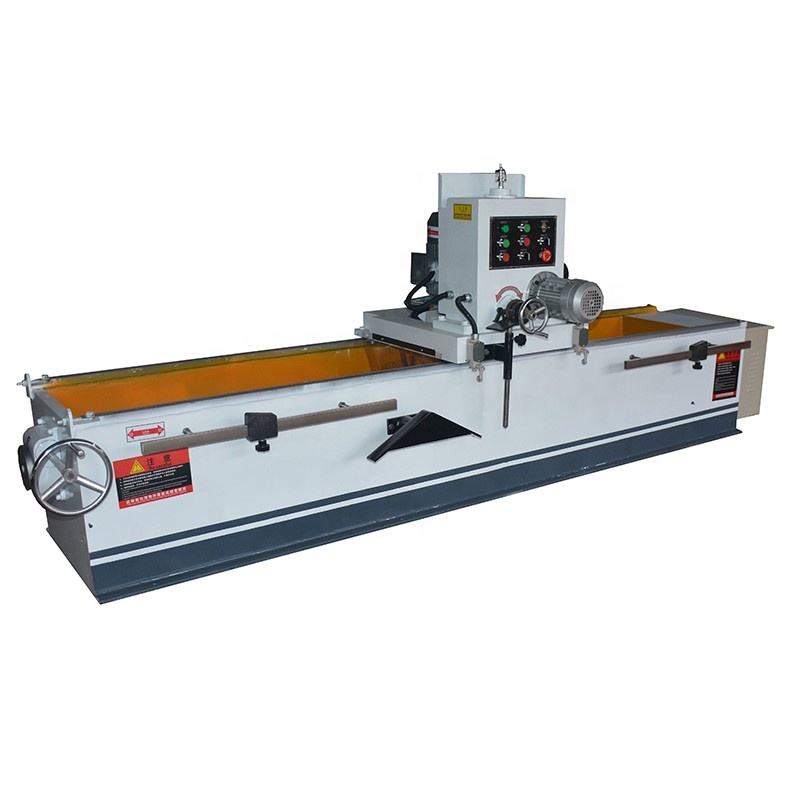
Understanding the Knife Grinding Machine and Its Applications:
A Knife Grinding Machine operates by precisely removing a microscopic layer of material from a blade's cutting edge using an abrasive grinding wheel. Unlike general-purpose tool grinders, the industrial Knife Grinding Machine is specifically designed to handle the long, straight blades commonly used in woodworking planers, paper shears, plastic granulators, and chipper machines . It can also be configured to sharpen round knives used in food processing and film slitting.
The Knife Grinding Machine is indispensable across multiple sectors:
Woodworking and Timber Processing: Sharpening chipper knives, planer knives, and veneer peeling knives to maintain clean, efficient cuts and extend tool life.
Paper and Converting Industry: Restoring the precise edges of paper cutter knives, slitter blades, and guillotine knives, which are critical for achieving clean cuts without fraying .
Plastic and Recycling Industry: Maintaining granulator blades and shredder knives. Dull recycling blades increase energy consumption and produce inconsistent particle sizes, making a Knife Grinding Machine vital for operational efficiency .
Industrial Knife Manufacturing: Used by knife manufacturers for the final surface grinding and sharpening of new blades to exact specifications .
Technical Specifications and Performance Metrics
A high-performance Knife Grinding Machine is defined by its ability to achieve micron-level precision consistently.
Key technical specifications include:
1 Grinding Length Capacity: Industrial Knife Grinding Machine models are available with grinding lengths ranging from 1,000 mm up to 7,100 mm, accommodating the longest industrial blades. Standard models often start at 1,500 mm, while larger systems can handle blades up to 4,000 mm or more for specialized applications.
2 Grinding Precision: Knife grinding machine precision is typically measured by the parallelism of the magnetic chuck, with high-end models achieving ±0.02 mm or better. This level of precision ensures a uniform cutting edge along the entire length of the blade.
3 Motor Power: A powerful grinding wheel motor is essential for efficient material removal. Industrial Knife Grinding Machine units are equipped with motors ranging from 5 kW to 15 kW, enabling efficient sharpening of large, high-hardness blades . For smaller-scale operations, a less powerful but equally precise Knife Grinding Machine may be sufficient .
4 Control Systems: Modern Knife Grinding Machine systems incorporate advanced control technologies. Many units feature Siemens PLC (Programmable Logic Controller) systems that manage the grinding wheel downfeed and carriage movement, ensuring precise, repeatable, and automated grinding cycles. Some models offer CNC functionality for fully automated sharpening operations.
Key Features of a Modern Knife Grinding Machine
The design of a professional Knife Grinding Machine incorporates several features that distinguish it from simple manual sharpeners:
Electromagnetic Worktable: This technology securely holds the blade during grinding, preventing movement and ensuring stable positioning to within ±0.02 mm -1. One end of the table is typically provided with a worm drive mechanism, allowing the operator to rotate the knife rest within a 0-90° range to adjust the grinding angle .
Force Cooling System: Friction from grinding generates significant heat, which can alter the temper of the tool steel and cause micro-cracks. A high-quality Knife Grinding Machine is equipped with an integrated coolant system that continuously sprays the grinding point, protecting the blade’s hardness and preventing thermal damage.
High-Stability Machine Base: The machine body is typically made of double-layer high-quality iron plate or cast iron, which is aged and finished to ensure long-term accuracy and stability . This robust construction is crucial for maintaining micron-level precision over extended periods.
Adjustable Grinding Angle: The ability to adjust the worktable angle, often from 0 to ±90°, is a standard feature that makes the Knife Grinding Machine versatile enough to handle a wide variety of blade geometries .
Benefits of In-House Sharpening with a Knife Grinding Machine:
Investing in a dedicated Knife Grinding Machine offers numerous advantages over outsourcing blade sharpening:
1 Eliminate Downtime: On-site sharpening capabilities enable quick blade changes and sharpening between production runs, minimizing costly downtime.
2 Consistent Output Quality: Precise grinding ensures all blades have the same bevel angle, leading to a clean, uniform cut and consistent product quality.
3 Extended Blade Lifespan: The automated feed system and precision grinding of a Knife Grinding Machine remove the minimum material necessary per cycle, maximizing the number of sharpenings each blade can undergo.
4 Cost Savings: By extending blade life and eliminating shipping and service costs, a Knife Grinding Machine can pay for itself within months, offering a clear return on investment.
Contact us:
Marketing@huataogroup.com
Tel:+86 13383116640 (Wechat/whatsapp)
http://wa.me/13383116640
Website:www.huataoshredder.com
#KnifeGrindingMachine #BladeSharpening #IndustrialKnifeGrinder #RecyclingEquipment #Woodworking #PaperIndustry #PrecisionGrinding #Huatao #Manufacturing #ToolGrinding
can not be empty
can not be empty

HUATAO GROUP - Recycling Machine and Spare parts
ADD : No.298 Zhonghua North Street, Shijiazhuang 050000 China.
TEL : +86 13383116640
EMAIL :marketing@huataogroup.com
 WhatsApp & WeChat : +86 13383116640